
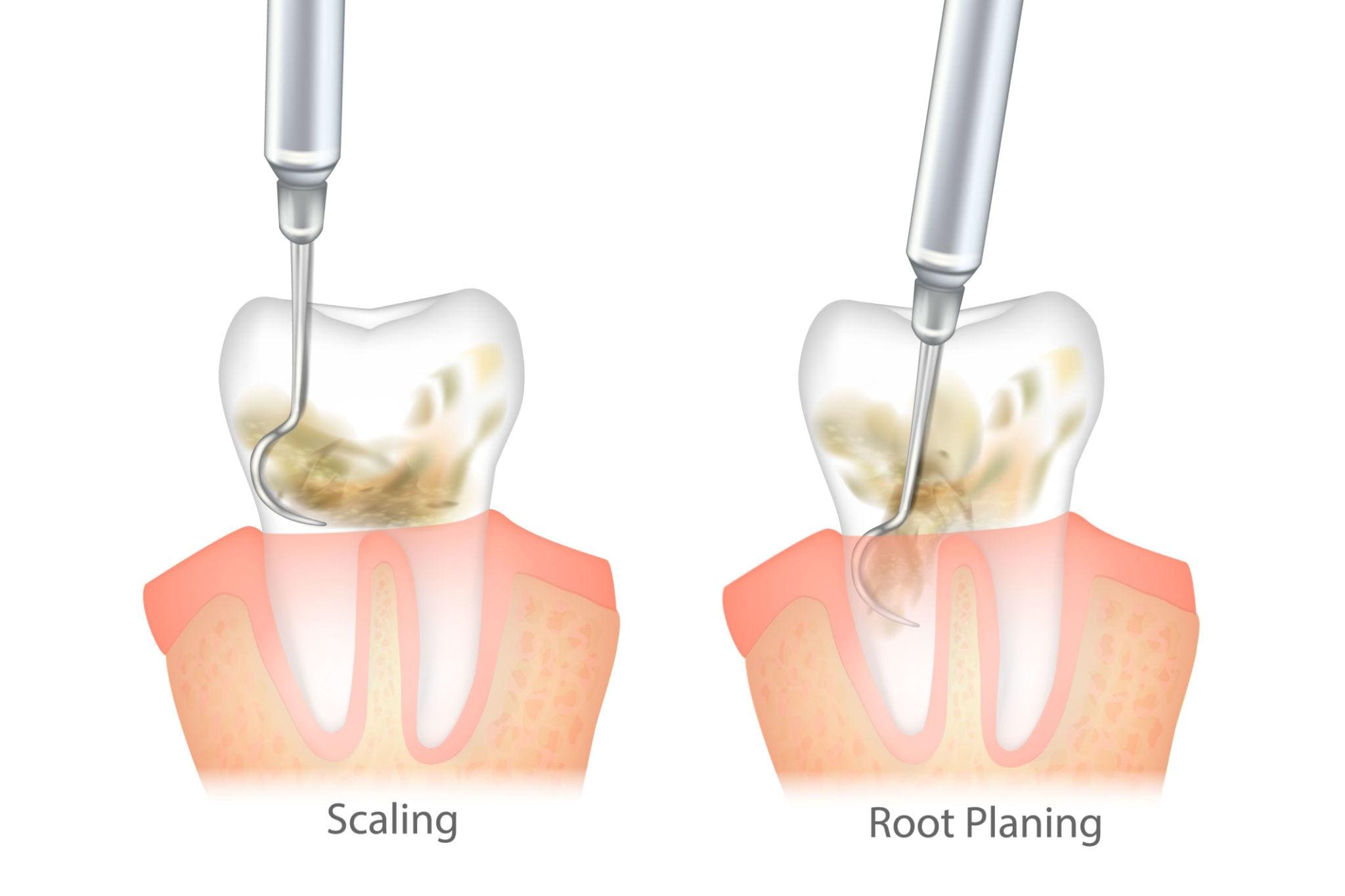
If you have been told you need a “deep cleaning,” you may be wondering how it differs from a regular dental cleaning.Scaling and root planing is not cosmetic. It is a therapeutic procedure used to treat gum infection below the gumline. When bleeding, swelling, and deep pockets are present, a standard cleaning is often not enough.
What Is Scaling and Root Planing?
Scaling and root planing is a non-surgical periodontal procedure designed to remove plaque and hardened tartar from beneath the gumline.
The process involves two components:
Scaling:
Removal of plaque and calculus deposits from the tooth surface and below the gums.
Root Planing:
Smoothing the root surface to remove bacterial toxins and create a cleaner surface for gum reattachment.
This treatment targets infection in areas that toothbrushes and floss cannot reach.
How Is a Deep Cleaning Different From a Regular Cleaning?
A routine dental cleaning focuses primarily on:
- Removing plaque above the gumline
- Polishing enamel
- Maintaining healthy gums
Scaling and root planing goes deeper.
It addresses:
- Periodontal pockets
- Bacterial colonies beneath the gum tissue
- Early bone-supporting structure involvement
If pocket measurements are elevated during periodontal charting, deeper treatment is often recommended.
When Is Scaling and Root Planing Necessary?
Dr.Tamara Marjan may recommend scaling and root planing if you have:
- Persistent bleeding gums
- Pocket depths beyond healthy range
- Early to moderate periodontitis
- Inflammation that has not responded to routine cleanings
Patients who have been told they have “deep pockets” or bone loss often benefit from this conservative first phase of periodontal therapy.
What Happens During the Procedure?
Step 1: Anesthesia for Comfort
Local anesthesia is typically used to numb the treatment area.
This ensures the procedure is comfortable and allows for thorough cleaning beneath the gumline.
Step 2: Removal of Bacteria and Calculus
Specialized instruments remove plaque and tartar from deep pockets around each affected tooth.
Ultrasonic tools and hand instruments may both be used for precision.
Step 3: Root Surface Smoothing
After deposits are removed, the root surface is carefully smoothed.
This reduces rough areas where bacteria tend to accumulate and promotes healthier gum attachment.
Step 4: Possible Local Antimicrobial Therapy
In some cases, localized antimicrobial agents are placed into periodontal pockets to reduce bacterial load during healing.
Not every case requires this step. It depends on severity.
How Long Does Scaling and Root Planing Take?
Treatment is often divided into quadrants.
Depending on the extent of disease:
- One quadrant may be treated per visit
- Multiple areas may be addressed over several appointments
Each visit typically lasts about an hour.
The timeline depends on the number of teeth involved and the depth of infection.
What to Expect After the Procedure
Mild soreness is common.
You may experience:
- Tenderness for a few days
- Slight swelling
- Increased sensitivity to temperature
- Minor bleeding during brushing
These symptoms typically improve within a week.
Your dentist will provide detailed aftercare instructions to support healing.
Aftercare Guidelines
To support recovery:
- Use a soft-bristle toothbrush
- Avoid aggressive brushing
- Follow antimicrobial rinse instructions if prescribed
- Avoid very hot or spicy foods for 24–48 hours
- Continue flossing gently
Consistent home care is essential to maintain results.
When to Call After Treatment
Contact the office if you experience:
- Persistent swelling beyond several days
- Fever
- Severe pain not controlled by medication
- Excessive bleeding
While complications are uncommon, monitoring healing is important.
Will Scaling and Root Planing Cure Gum Disease?
For gingivitis and early periodontitis, scaling and root planing can significantly reduce inflammation and stabilize the condition.
However, gum disease is influenced by long-term bacterial control.
This is why periodontal maintenance visits every 3 to 4 months are often recommended after treatment.
Maintenance helps prevent reinfection.
Why Maintenance Is Critical After Deep Cleaning
Even after successful treatment, bacteria naturally return over time.
Patients with a history of periodontal disease may accumulate plaque more quickly beneath the gumline.
Maintenance visits allow:
- Monitoring of pocket depths
- Removal of new buildup
- Early detection of recurrence
Skipping maintenance increases the risk of progression.
Does Everyone With Bleeding Gums Need a Deep Cleaning?
Not necessarily.
Mild gingivitis without deep pockets may respond to routine cleaning and improved hygiene.
A periodontal evaluation is necessary to determine the appropriate level of treatment.
Dr. Marjan performs detailed pocket measurements before recommending scaling and root planing.
How Scaling and Root Planing Protects Dental Implants
For patients planning dental implants, controlling gum inflammation is essential.
Healthy gums and stable bone create a strong foundation for implant placement.
If gum infection is present, it must be treated before implant therapy proceeds.
Patients with existing implants also benefit from ongoing periodontal monitoring to prevent inflammation around implant sites.
Frequently Asked Questions
Is scaling and root planing painful?
Local anesthesia is used to keep you comfortable during the procedure.
How long does healing take?
Mild tenderness typically improves within several days.
Will my gums grow back after deep cleaning?
Inflammation can reduce, and tissue may tighten around teeth. However, lost bone does not regenerate on its own.
How often will I need maintenance visits?
Many patients benefit from periodontal maintenance every 3 to 4 months.
Can gum disease return after treatment?
Yes, if plaque control is inconsistent. Maintenance visits reduce this risk.If you have been told you need a deep cleaning in Chicago, call Minty Dental Boutique at (773) 286-5286 to schedule your periodontal consultation. Early treatment protects the foundation of your teeth and helps preserve long-term oral health.
