If you are missing most or all of your teeth, you may be researching full-arch dental implants in Chicago. Terms like “All-on-4” or “full mouth implants” often come up, but it is not always clear what they mean or whether they are appropriate for your situation.
Full-arch dental implants are designed to replace an entire upper or lower arch of teeth using a limited number of strategically placed implants. This approach can provide a fixed alternative to traditional dentures.
What Are All-on-4 and Full-Arch Dental Implants?
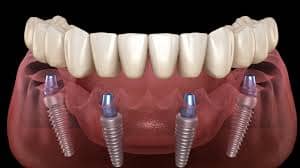
“All-on-4” is a term commonly used to describe a treatment concept where four dental implants are used to support a full arch of teeth. In some cases, five or six implants may be used depending on bone structure and bite forces.
Instead of placing an implant for every missing tooth, the implants act as anchors for a fixed bridge that restores the entire arch.
This approach may be recommended for patients who:
- Are missing most or all teeth in one arch
- Have failing teeth that require removal
- Are frustrated with unstable dentures
- Want a more secure, non-removable option
Each case is different, and the number of implants required depends on bone quality and treatment goals.
How Full-Arch Implants Differ From Traditional Dentures
Traditional dentures rest on the gums and rely on suction or adhesive for stability. Over time, changes in bone shape can affect their fit.
Full-arch implants, by contrast, are supported by implants anchored into the jawbone. This provides:
- Greater stability during chewing
- Reduced movement while speaking
- Improved confidence compared to loose dentures
- Support for jawbone stimulation
While implant-supported restorations are not removable by the patient, they still require daily hygiene and professional maintenance.
Who Is a Good Candidate for Full-Arch Dental Implants?
You may be a candidate if you:
- Have multiple missing or failing teeth
- Currently wear dentures and want more stability
- Have sufficient jawbone to support implants
- Are in good general health
If bone loss is present, additional procedures such as bone grafting may be discussed.
A thorough evaluation is required before determining candidacy.
The Full-Arch Implant Process: Step by Step
1. Consultation and Evaluation
Your visit begins with a comprehensive exam and imaging to evaluate bone density and anatomy. This planning phase determines the safest and most stable implant positions.
2. Treatment Planning
Your Forest Glen dentist will review:
- Number of implants required
- Type of final restoration
- Whether extractions are needed
- Healing expectations
You will also discuss financial considerations and payment options.
3. Implant Placement
The implants are placed into the jawbone during a surgical appointment. In some cases, a temporary restoration may be provided while healing occurs.
4. Healing Phase
Over several months, the implants integrate with the bone. This process creates the stability needed to support a full-arch prosthesis.
5. Final Restoration
Once healing is complete, your custom full-arch bridge is secured in place. The final prosthesis is designed to restore function and aesthetics.
How Long Does All-on-4 Treatment Take?
Timeline varies depending on:
- Bone health
- Whether grafting is needed
- Healing response
- Number of arches treated
Some cases allow for temporary teeth soon after placement. Final restorations are typically placed after adequate healing.
Your dentist will provide a detailed Dental Implants timeline specific to your situation.
What About Cost?
Full-arch dental implants involve multiple components and stages, so pricing varies based on:
- Number of implants placed
- Type of prosthesis
- Preparatory procedures
- Complexity of the case
At Minty Dental Boutique, we provide a personalized estimate during your consultation. Financing options through CareCredit and Cherry are available for qualified patients, and we help review insurance benefits when applicable.
Are Full-Arch Implants Permanent?
Dental implants are designed to be long-term solutions. With proper care and regular dental visits, many implants remain stable for many years.
The prosthetic bridge attached to implants may require maintenance or replacement over time, depending on wear and oral hygiene habits.
Daily brushing, professional cleanings, and routine exams help protect your investment.
Alternatives to Full-Arch Dental Implants
Not every patient is an ideal candidate for All-on-4 or similar approaches.
Alternative options may include:
- Implant-retained removable dentures
- Traditional full dentures
- Implant-supported bridges in segments
Your Forest Glen dentist will explain each option so you understand the benefits and limitations before making a decision.
Frequently Asked Questions About All-on-4 and Full-Arch Implants
How many implants are needed for a full arch?
Many cases use four to six implants, depending on bone structure and bite forces.
Can full-arch implants replace all my teeth?
Yes, full-arch implants are designed to replace an entire upper or lower arch of teeth.
Are these implants removable?
The final restoration is fixed in place by your dentist and is not removed daily by the patient.
Is the procedure painful?
Most patients report manageable soreness after placement. Post-operative instructions help support healing.
What if I have worn dentures for years?
Long-term denture wear can lead to bone loss. A clinical evaluation will determine whether grafting is necessary. If you are exploring All-on-4 or full-arch dental implants in Chicago, call Minty Dental Boutique at (773) 286-5286 to schedule your consultation. We will review your oral health and outline the safest and most effective path forward.
