
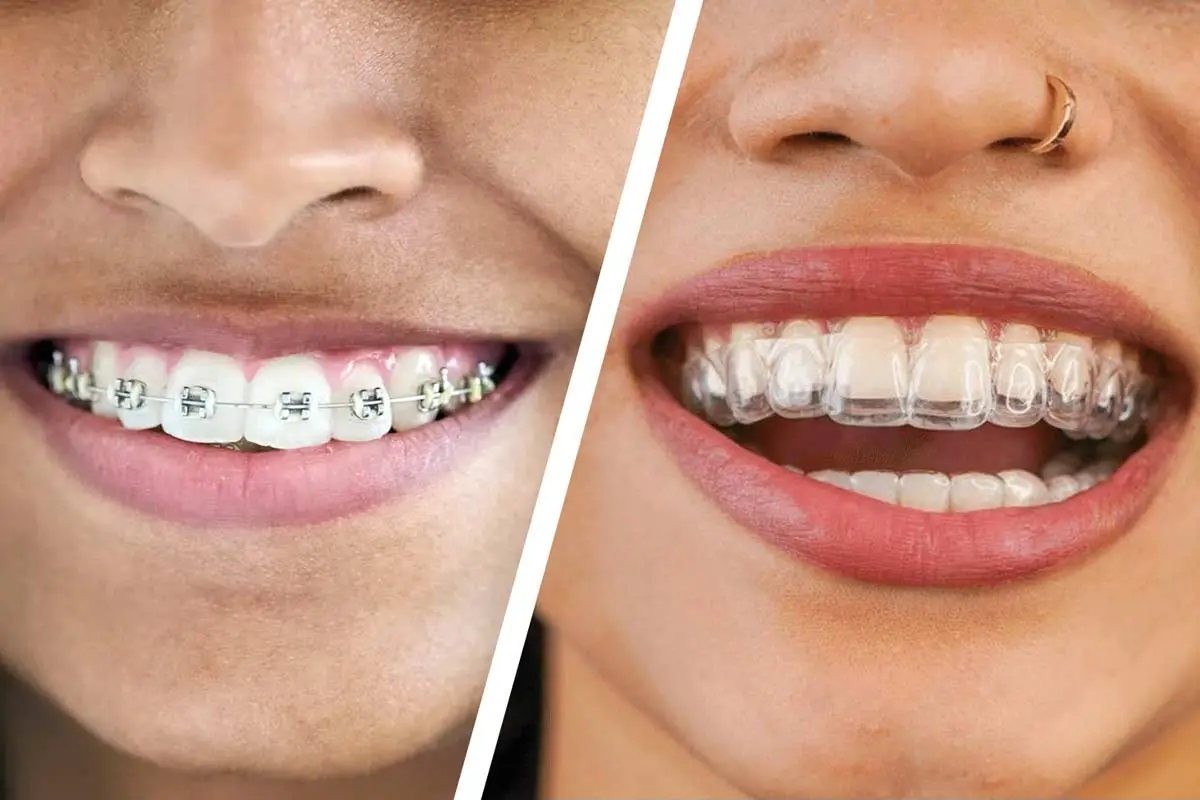
If you are trying to decide whether Invisalign or braces are the right choice for your smile, you are not alone. Many patients in Chicago want to understand the differences before starting orthodontic treatment.
Both Invisalign and traditional braces are effective orthodontic solutions. The right choice depends on your alignment goals, lifestyle preferences, and clinical needs. Below, we break down what you need to know.
Quick Answer: Invisalign or Braces?
Invisalign uses removable clear aligners to gradually move teeth. Braces use metal or ceramic brackets and wires to shift teeth into place.
In general:
- Invisalign offers a discreet appearance
- Braces work continuously without removal
- Both can treat mild to complex alignment concerns
A consultation is the best way to determine what works for your smile.
What Is Invisalign?
Invisalign in Chicago is a modern orthodontic treatment that uses custom-made clear aligners to straighten teeth. These aligners are removable and nearly invisible when worn.
Patients wear each aligner for about one to two weeks before switching to the next in the series.
Invisalign can correct:
- Crowding
- Spacing
- Overbite
- Underbite
- Crossbite
- Mild to moderate misalignment
Treatment is planned using digital scans to create a customized approach.
What Are Traditional Braces?
Traditional braces use brackets attached to the teeth and connected with wires. The wires are adjusted periodically to move teeth into proper alignment.
Braces can treat complex bite issues and severe alignment concerns.
They may be recommended for:
- Significant crowding
- Severe bite issues
- Rotated teeth
- Complex orthodontic cases
Braces remain fixed in place throughout treatment.
Invisalign vs Braces: Key Differences
Both options effectively straighten teeth, but there are differences that may influence your decision.
Removability
Invisalign aligners are removable for eating and cleaning.
Braces remain fixed and cannot be removed during treatment.
Oral Hygiene
With Invisalign, brushing and flossing are easier since aligners are removed.
Braces require careful cleaning around brackets and wires.
Comfort
Invisalign aligners are smooth and custom-fitted.
Braces may cause irritation from brackets and wires, especially after adjustments.
Office Visits
Invisalign appointments are typically spaced out and involve progress checks.
Braces often require more frequent wire adjustments.
Invisalign vs Braces: Which Is Faster?
The answer depends on your specific case.
Treatment time can vary based on:
- Tooth positioning
- Bite complexity
- Age
- Compliance
For patients who wear aligners as directed, Invisalign may offer similar treatment times to braces. In more complex cases, braces may be recommended.
Cost Comparison: Invisalign vs Braces in Chicago
Many patients assume Invisalign costs more than braces, but that is not always the case.
Cost depends on:
- Severity of alignment issues
- Length of treatment
- Insurance coverage
- Monitoring needs
In many situations, both options fall within a similar price range. Your dentist in Forest Glen will review exact costs during your consultation.
Invisalign for Adults in Chicago
Many adults prefer Invisalign because it is discreet and fits easily into professional and social settings.
Adults often choose Invisalign for:
- Cosmetic alignment concerns
- Mild to moderate bite issues
- Relapse from previous orthodontic treatment
Clear aligners provide flexibility while improving smile alignment.
Braces for Teens
Braces remain a reliable option for teenagers, especially in more complex cases.
Benefits of braces for teens include:
- Continuous tooth movement
- No risk of forgetting to wear aligners
- Effective correction for developing bites
Your dentist will recommend the option best suited for growth and alignment needs.
Are There Cases Where Invisalign Is Not Ideal?
While Invisalign treats many orthodontic concerns, it may not be recommended for:
- Severe skeletal discrepancies
- Complex jaw alignment issues
- Certain advanced bite corrections
A professional evaluation determines candidacy.
What to Expect at Your Consultation
During your orthodontic consultation, your dentist will:
- Evaluate your teeth and bite
- Take digital scans
- Review treatment options
- Discuss timeline
- Explain cost and payment options
You will leave with a clear understanding of whether Invisalign or braces are right for you.
Frequently Asked Questions
Is Invisalign better than braces?
Both are effective. The best option depends on your clinical needs and lifestyle preferences.
Are braces more effective than Invisalign?
In complex cases, braces may provide more control. In many mild to moderate cases, Invisalign works equally well.
Is Invisalign uncomfortable when first starting?
Mild pressure is normal as teeth begin to shift. This usually subsides within a few days.
Which is more noticeable in Chicago?
Invisalign is nearly invisible when worn. Braces are more visible.
Can adults choose braces instead of Invisalign?
Yes. Adults can choose either option based on preference and dental needs.
Do braces qualify for Invisalign pricing?
Both treatments vary in cost depending on case complexity and length of treatment.
If you are unsure whether Invisalign or braces are right for your smile, schedule a consultation with your Forest Glen Dentist to receive a personalized recommendation.